
Related
The One Free Choice
A sermon on the bondage of the will, the one choice that matters, and the God who makes our choosing possible.
9 min reading in—Sermons
A sermon on the foolishness of God that confounds the wisdom of the world, and the radical call to love our enemies.
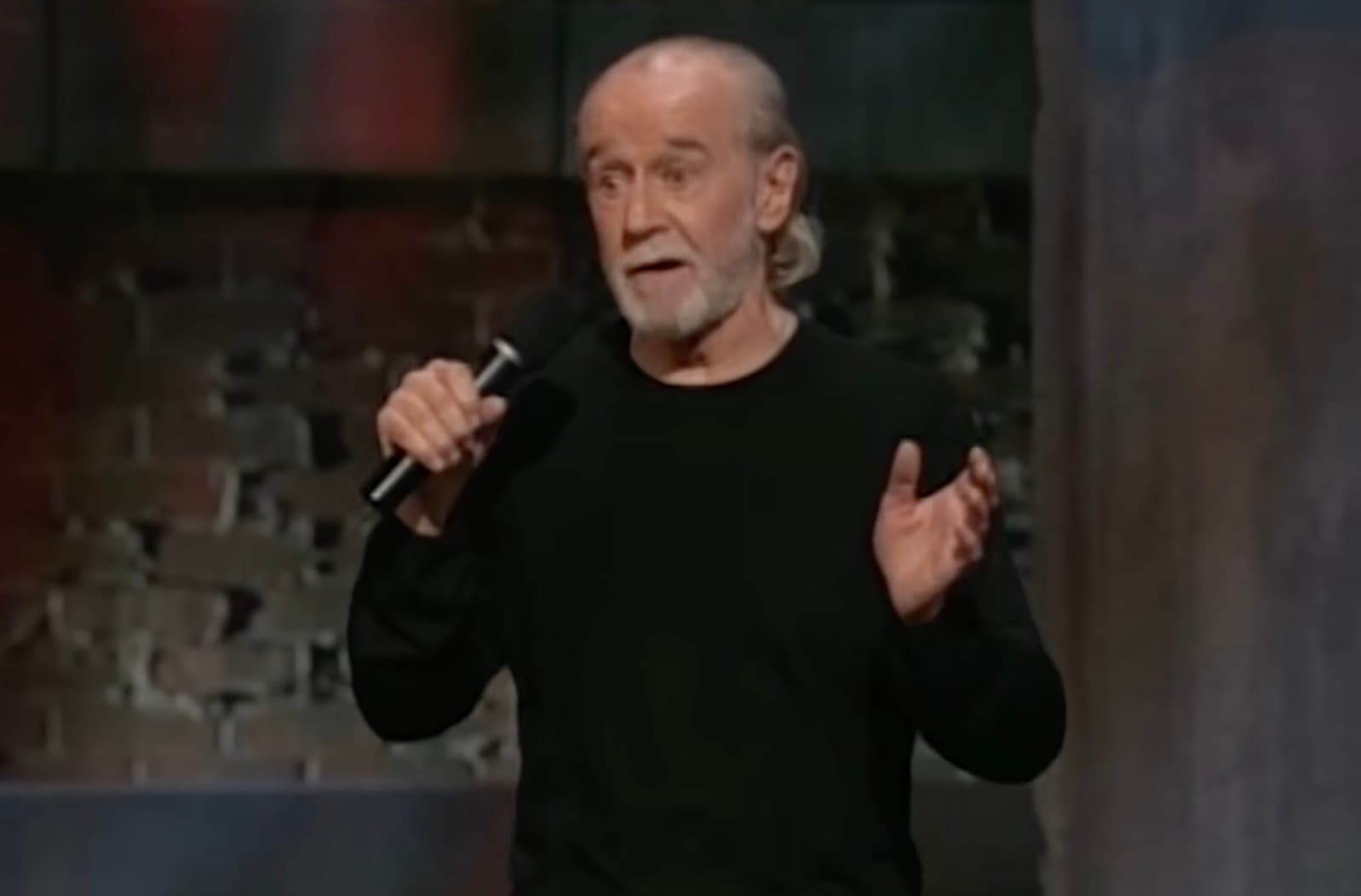
Delivered at Immanuel Church, Tel Aviv — February 21, 2026
Readings: 1 Corinthians 3:18–23 · Matthew 5:43–48
I have many friends and acquaintances who are not believers, and they send me the same video year after year. The day comes when someone new gets exposed to this piece of humour, and if he knows me, he immediately knows what to do about it.
It's the George Carlin bit about religion. I doubt there's anyone in this room who hasn't received it at least once — as a lighthearted joke, or a way to provoke, or as a funny way to finish the argument. I'll paraphrase for those who may have forgotten the punch: there's a man in the sky, he is all-knowing and all-powerful, and he has a particular list of ten things he does not want you to do, and if you do any of those things, you are going to be tortured for eternity. And then Carlin stops, and delivers it: but he loves you. And then he stops again: and he needs your money.
From beginning to end, this bit resembles a worldly version of the creed. It touches on all the pain points the world has with God — his power, his judgment, his love, his Church — and presents our relationship with him as a ridiculous, stupid joke.
And no clever argument on our part can fix it.
This is exactly the reaction Paul expects. He writes to the Corinthians:
"The wisdom of this world is foolishness in God's sight."
And this works the other way around, too. What is of God appears as foolishness to the world. When Paul stood before Festus, the Roman governor, and spoke about Christ and the resurrection, Festus interrupted him and said: "You are out of your mind, Paul! Your great learning is driving you insane." This wasn't a polite disagreement. This was a powerful, educated man looking at a believer and concluding that he had lost his mind.
Carlin's audience laughs for the same reason Festus shook his head. From the outside — from the world's perspective — what we believe and how we live makes no sense.
And Paul's response to this is remarkable. He does not say: "Let me explain it better so the world will understand." He does not offer a smarter argument. He says: become fools.
"Do not deceive yourselves. If any of you think you are wise by the standards of this age, you should become 'fools' so that you may become wise."
God's wisdom is not a worldly wisdom with a cross on top. It is completely, fundamentally incompatible with it. And this incompatibility is not a problem to be solved. It is a feature of life in Christ.
And it touches everything. It's not only the fact that we come to church each Saturday, or that some of us say grace before a meal. God's wisdom, as it slowly works its way into you, begins to reshape the way you make decisions — all of them. Business decisions. Financial decisions. How you treat people who have wronged you. Whether you respond to an insult with an insult. Whether you do what the world expects from you in pursuit of a benefit.
And when you make those decisions differently — not for show, not to be strange, but because you genuinely cannot do it the other way anymore — people around you will notice. They will think something is wrong with you. They may twist a finger at their temple behind your back and refer to you in their stand-ups. And that, brothers and sisters, is not a bad sign.
But let's be honest with ourselves. We all know the tension. We all recognise in ourselves the pull toward having two modes of operation: the Saturday self who sits in this room, and the Monday self who operates by a different set of rules — the "real", "normal" rules. And that gap — between what we confess on Saturdays and how we live — that gap is precisely where God's foolish wisdom wants to do its work.
Let me give you an example of what this looks like. It is something that everyone who has decided to accept God's reality and try to live accordingly has experienced.
You see someone around you who is suffering. Perhaps it's sickness, or loneliness, or poverty — or, as it happens quite often, all of the above. He may not be vocal about it. But you happen to be a witness, and he is your neighbour. And as a reasonable person, you sit down and think: here is what I can do, and here is the limit of my ability. I have a family to care for. I have responsibilities of my own. This is a sober, honest approach — and it is not a wrong one. So you do what you can, approaching the limit you have set for yourself.
But the person and his problems do not go away. He lingers near, and he's one of the people you pray for. And you think again — being a reasonable man — I have done what I could. His problems are not going away. Can I solve them? No, I cannot. Perhaps this is simply how life is.
It is always the same question: me or someone else. My evening or his need. A better cut of meat for my family, or a simpler meal shared with someone who has none. We face it so often we barely notice it anymore.
The sages of the Talmud distilled it in its barest form to construct a reasonable answer: two men are travelling through a desert, and one has a flask of water. If they share, both will die. If only one drinks, he will survive. Rabbi Akiva taught that your own life takes precedence. It is an answer that worldly wisdom may call correct.
But being followers of the Messiah who was hanged on the tree, we see that the reasonable answer is not enough.
And we are not in the desert, but now we can return to the person sitting near you — the one whose problems have not gone away — with some better understanding of the situation. The distilled question and the everyday question are the same question. And I have a strong feeling you already know the answer. You have done what you believed you could. Now it is time to do what you cannot. Because it is not you who will do the work, nor is it you who will measure the results. You have been called; you accepted the call. And this time, you will stand up.
Now — here is where I want us to notice something we almost never notice.
When we reach a boundary like this — between what is sensible and what God seems to be asking — we feel it as a crisis of faith. As if we are being asked to leap into the dark. And that is understandable.
But consider: the entire world we live in is built on faith, and we never call it that. Banks, money, contracts — the whole system exists, functions, and holds together because millions of people place their trust in it every day. No one calls this faith. No one says: "You are naive for building your entire life around the assumption that these systems will hold." We call it common sense.
But the moment someone trusts God's promise with the same seriousness — the moment someone takes "give, and it will be given to you" as seriously as they take their savings account — it is foolishness. It is naivete. It is the man in the sky.
And here is what Paul catches: "He catches the wise in their craftiness." The wise are not caught because they lack faith. They are caught because they don't recognise their own faith for what it is. The world runs on enormous trust in its own constructs, and calls that trust reason. And the trust God asks of us — which is, in its nature, no different — the world calls foolishness.
Imagine a person who has inherited a great estate. He goes about his daily life with a certain ease. And because he is secure, he can afford to be generous. He can afford to be patient. He can afford to take risks that others cannot.
Now listen to how Paul continues — because this is where the passage takes a surprising turn:
"No more boasting about human leaders! All things are yours — whether Paul or Apollos or Cephas or the world or life or death or the present or the future — all are yours, and you are of Christ, and Christ is of God."
All things are yours.
You have inherited the greatest estate that ever was. Not because you built or earned it. But because you belong to Christ, and Christ belongs to God.
And from within this inheritance, something strange happens to the word sacrifice. That evening you spent with someone in need — the one that seemed, by your calculations, unreasonable — what is it, really, set against the estate you have received? What the world calls sacrifice, the child of God may simply call Tuesday.
The heir knows what the Father is like. And the Father's love does not stop at those we find easy to love. His sun rises on all. This is where the foolishness of God reaches its most radical — its most impossible — point.
Jesus says:
"You have heard that it was said, 'Love your neighbour and hate your enemy.' But I tell you, love your enemies and pray for those who persecute you, that you may be children of your Father in heaven."
Love your enemies.
In this country, at this moment in history — you don't need me to tell you how that sounds. You know. The world says: pick a side. Protect your own — we talked about it the last time. And here stands Jesus, saying: love them. Pray for them.
This is not a figure of speech and not a metaphor. These words mean exactly what they say. Not love in some abstract, theological sense, but actual love for actual enemies. And throughout the centuries, sincere Christian theologians have dealt with this commandment in exactly the same way as their Jewish sage colleagues: they have struggled with it, spiritualized it, limited the circle of those considered "the enemy," viewed love as an internal state, not as a specific action — honestly and sincerely seeking a way to make God's impossible demand fit within the framework of human wisdom. Which is, of course, precisely what Paul warns against.
We cannot do this. Not by our own strength, willpower or wisdom. To love an enemy requires something that does not come from within us. It requires the Holy Spirit. It requires asking God, again and again, for the capacity to do what is humanly impossible. Not once, but daily. Not as an achievement we complete, but as a gift we keep receiving.
And Jesus himself tells us why: "that you may be children of your Father in heaven. He causes his sun to rise on the evil and the good, and sends rain on the righteous and the unrighteous." And then he says: "Be perfect, therefore, as your heavenly Father is perfect." This is, perhaps, the most terrifying sentence in all of Scripture. But listen to what perfection means here: it is the Father's own character — sending sun and rain on everyone, withholding nothing, loving without calculating who deserves it. The perfection Jesus calls us to is not a standard we achieve. It is a character of God we receive. We participate in it not by mastering it, but as heirs — because, as Paul just told us, all things are already ours.
And this brings us to the heart of it.
Because Christ was the ultimate fool in the eyes of the world. He loved his enemies — which is to say, he loved us — to the point of death. The cross is the most foolish act in human history: God becoming man, and then allowing himself to be killed by the people he came to save. No worldly wisdom can make sense of that.
And the foolishness we are called into is not a program we execute. It is not a standard we achieve. It is a life we have already been given — in baptism, in the Word, at this table.
Of course this is not something we learn once and hold forever. We stumble through it. We wake up on Monday and slip back into the world's wisdom before we've finished our coffee. And our trust in the one who gave us everything shrinks a little. But each time we act from the "foolish" inheritance rather than from our calculations, it grows a little.
And what does God do with that?
The Psalmist tells us:
"He does not treat us as our sins deserve or repay us according to our iniquities. For as high as the heavens are above the earth, so great is his love for those who fear him; as far as the east is from the west, so far has he removed our transgressions from us. As a father has compassion on his children, so the Lord has compassion on those who fear him."
The Father Jesus points us to in Matthew — the one who sends sun on the evil and the good, rain on the righteous and the unrighteous — is the same Father the Psalmist sings about. The one whose compassion is not measured by our performance. There is a man in the sky — and he loves you. Not as a punchline. As the most radical truth in the universe. And the cross proves it.
We are fools. We are heirs. We are loved.
And we are sent back into the world — not with a better argument, but with a different life.
Amen.
Related
A sermon on the bondage of the will, the one choice that matters, and the God who makes our choosing possible.
Related
A sermon on the persistent widow, the layers we build against helplessness, and what faith looks like when there is no backup plan.
Related
A sermon on the ten lepers, the one who returned, and the difference between being healed and being saved.